
Knee arthritis
Knee arthritis: understand every option, including GAE.
Knee osteoarthritis wears away the cartilage that cushions the knee and can cause long-lasting pain. Many treatments can help, from exercise and medicines to injections, nerve procedures, and knee replacement. This guide explains them, with a closer look at genicular artery embolization (GAE), a newer procedure that is still being studied.
Written and reviewed by Varun Danda, MD, interventional radiology resident physician. Every page cites its sources.
Understand knee arthritis and GAE
Start here if GAE has come up as an option for your knee pain.
Talk with your doctor first
These guides help you prepare questions. They do not diagnose knee pain or say which treatment is right for you. Knee pain does not always come from arthritis, so start with your doctor's exam. Get urgent care for a knee that is suddenly hot, red, or very swollen, a fever, or not being able to put weight on your leg.
Treatment options
Exercise, medicines, injections, image-guided procedures, and surgery, side by side.
Compare options
GAE compared with other treatments
Spotlight: genicular artery embolization (GAE)
As of October 2026, GAE is still being studied. Sham-controlled trials are mixed: one small trial favored GAE, and two larger trials found no clear difference from a sham procedure. More randomized trials are underway. Read what each trial found.
Cost and preparing for your visit
Know what to ask, and what your plan may cover.
Cost and coverage
Questions for your doctor
Finding a specialist
What this section does not do
ProcedurePath does not collect your email, health details, or answers. These pages do not decide whether you are a candidate for any treatment, and they do not recommend, rank, or refer you to doctors.
Common questions.
What is knee osteoarthritis?
Knee osteoarthritis wears away the cartilage that cushions the knee and causes ongoing inflammation. It can make the knee painful and stiff.
What is genicular artery embolization (GAE)?
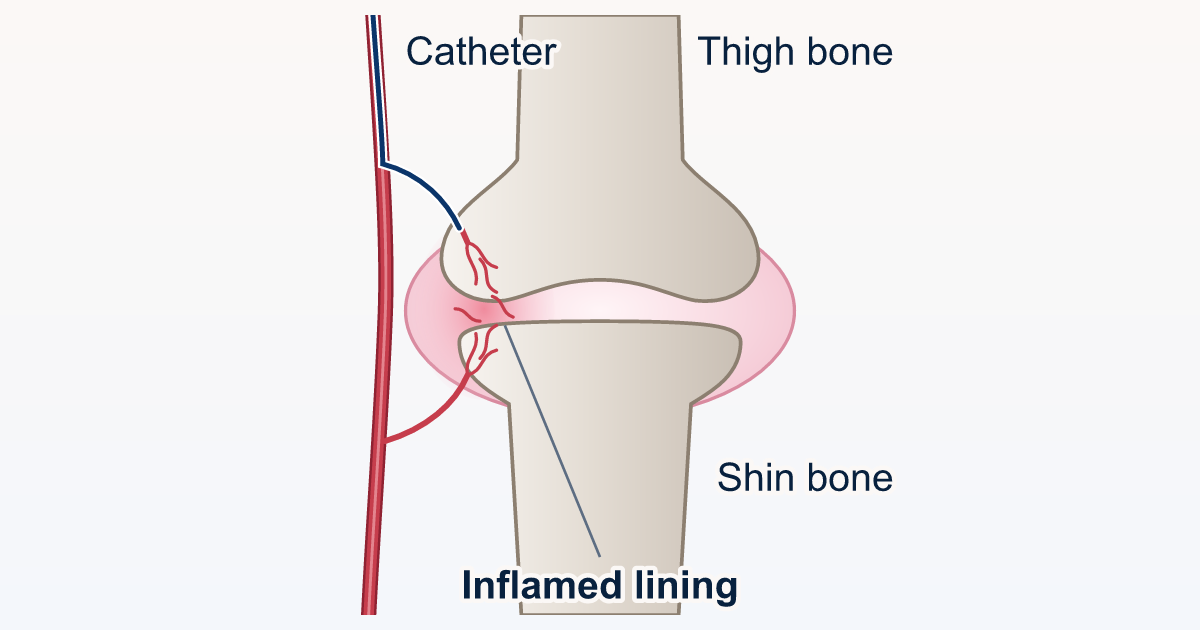
GAE is a procedure for knee pain from osteoarthritis. An interventional radiologist uses a small catheter to place tiny particles in the small arteries around the knee, to slow blood flow to inflamed tissue in the joint lining. It is still being studied.
Does GAE work?
Sham-controlled trials are mixed. One small trial found less pain after GAE than after a sham procedure, and two larger trials found no clear difference. More randomized trials are underway.
How do I find out if GAE is an option for me?
Talk with your doctor about all of your options. Bring your knee X-ray or MRI reports and a list of the treatments you have tried, and ask whether a visit with an interventional radiologist makes sense.
Talk with your doctor. This guide is education only. It does not diagnose or recommend a treatment for you. ProcedurePath does not collect your email, health details, or answers. Read the full medical disclaimer.